Ceylon Star Sapphires
Natural asterism from rutile silk, not diffused into the surface and not grown in a factory. Ceylon cabochons cut in Ratnapura, unheated, with a report number you can check.
Available Ceylon Star Sapphires Gemstones
2 stones


Other Ceylon Gemstones

Natural
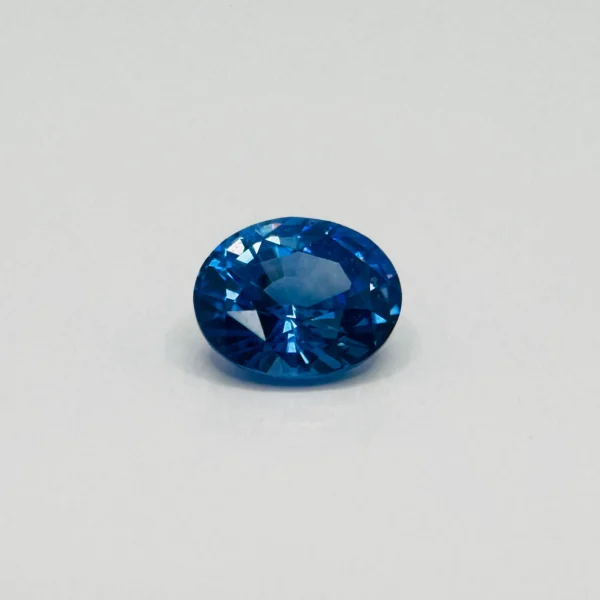
Natural Ceylon Blue Sapphire Oval Mixed Cut
Enquire
Natural
Natural Ceylon Vivid Blue Sapphire Round
Enquire
Natural
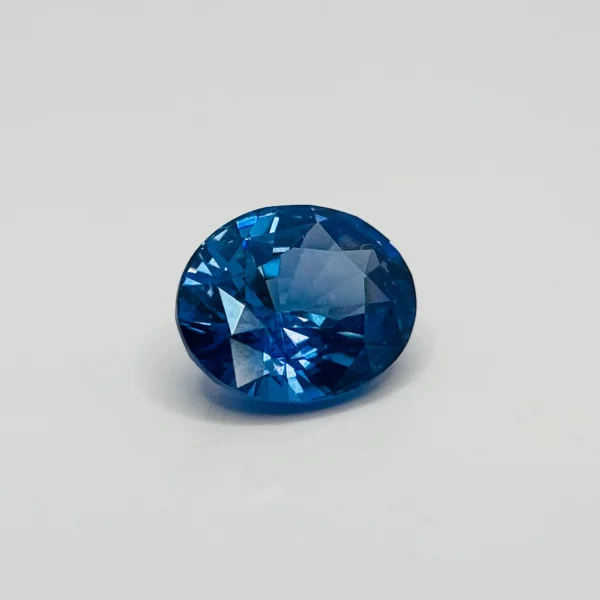
Natural Ceylon Blue Sapphire Mixed Oval
Enquire
Natural
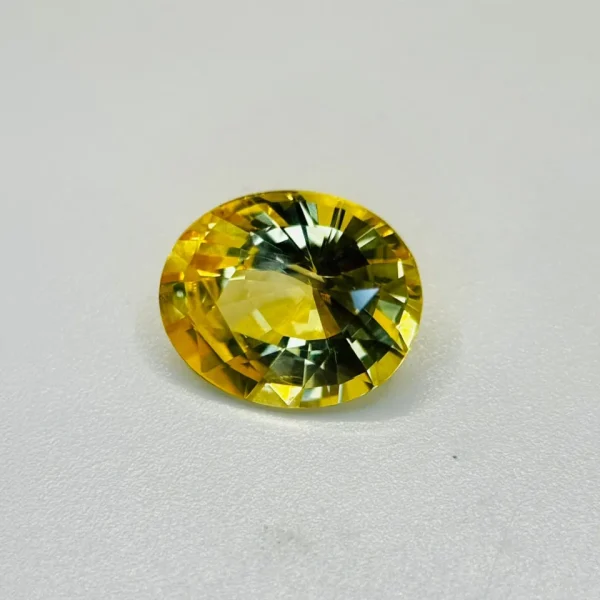
Natural Ceylon Vivid Yellow Sapphire
Enquire

Natural
Natural Ceylon Vivid Blue Sapphire Mixed Cut
Enquire

Certified
Parti sapphire, elongated octagon
US$ 3,150

Certified
Ceylon royal blue sapphire, cushion
US$ 8,900

Certified
Vivid blue sapphire, cushion
US$ 6,400
A torch will tell you most of it
A Ceylon star sapphire is the easiest stone we sell to fake convincingly and the easiest to check. Take it to one point of light, sunlight or a torch and move the light rather than your eyes.
A natural star drifts. The six rays glide across the dome as the light travels and the bright reflection of the bulb stays separate from the hub where the rays cross. On most synthetics the star and that reflection are welded together and slide as one piece. Look at the legs while you are there. On a natural star sapphire they are uneven, one ray brighter or longer or slightly bent, because the silk that made it grew that way. A star that is perfectly symmetrical, sitting on a body colour of even glassy blue, is telling you where it was made.
That test is not proof, which is why we put a report number on every stone. But it will save you from most of what is sold as star sapphire.
The silk that ruins a sapphire is the silk that makes this one
Roughly three quarters of the corundum that comes out of the Sri Lankan gravels is geuda: milky, translucent rough, clouded by rutile silk so dense the stones show a diesel sheen in transmitted light. Before the 1970s it was spread on garden paths. Then Thai burners worked out that heat dissolves the silk and the whole island's output of pale, useless rough became blue sapphire.
A star is that same silk, caught at the right density, in the right orientation, then left alone. Which is why heating and asterism cannot coexist. Burn a star sapphire and you get a cleaner, bluer stone with nothing on its face. So a deep, genuine star is itself reasonable evidence that a stone never went in the furnace and unheated is the ordinary condition at the good end of this category rather than a premium we charge you for.
Three ways to be sold a star sapphire that is not one
| What it is | How to spot it | What it is worth |
|---|---|---|
| Synthetic, sold as a Linde or Lindy star | Star too sharp and too centred, colour uniform and plastic looking, base of the cabochon smooth and flat | A small fraction. Millions were made from the 1940s on and they fill vintage jewellery |
| Diffusion treated | Star lives in a thin surface skin, so it weakens near the base of the dome and a recut removes it altogether | A fraction of a natural stone and it must always be disclosed |
| Lead glass filled | Poor star corundum bulked out with glass. Household acids and a jeweller's torch will damage it | Very little and it is fragile in a way sapphire never is |
None of this is theoretical here. Coloured glass arrives in Sri Lanka by the kilo and leaves as souvenirs. The National Gem and Jewellery Authority has called it the biggest threat to the island's name. We publish a laboratory and a report number on every stone because of that, not in spite of it.
The star and the clarity are in competition
This is the judgement that decides what a star sapphire is worth and it pulls in two directions at once. Silk has to be dense enough to throw a bright, complete star. Push past that and the same needles kill the stone and you are left with a grey pebble wearing a good star. A cabochon that keeps some glow underneath a clean six ray star is the one worth paying for and we turn down a great deal more than we buy.
Then look at where the star sits. Centred on the dome, six rays reaching the edge rather than fading halfway. Dome height matters too. Too shallow and the star goes weak and diffuse. Too tall and the stone sits on the hand like a thumbnail. We watch our cutters orient these by eye against the crystal axis and a centred star on a well judged dome is the whole of that skill on show.
Silver blue is the Ceylon star sapphire signature
Sri Lanka and Burma are the classic sources for rutile stars. Ceylon material runs a soft silvery blue with a bright star, often closer to grey than to the saturated blue of a faceted stone. That silveriness is not a fault. It is what the silk does to the body colour and anyone selling you a star sapphire in vivid faceted blue is selling you something else.
Black star sapphire is a different animal. Its rays come from hematite rather than rutile, mostly in iron rich material out of Australia and Thailand. The stars are softer edged, the stones much cheaper. Stars turn up in pink and purple too. Yellow, orange and green are genuinely uncommon.
A star sapphire costs a fraction of a faceted stone
The market pays for transparency and a star cabochon has given most of that away to get its star. A fine faceted blue sapphire can run to several thousand dollars a carat and well beyond. A good star cabochon is more likely to sit in the hundreds to low thousands and size pushes the per carat price up far less steeply than it does on faceted goods.
That makes this the cheapest way into a large, certified Ceylon sapphire that nobody else will be wearing. The cabochon we have listed carries its own price and report. You can check the number with the laboratory before you commit to anything.
Living with a cabochon
Nine on the Mohs scale and no cleavage plane, the same as any sapphire, so it will not scratch or chip in normal wear. The dome does stand proud of a setting more than a faceted stone, so consider a bezel if the ring is going on a working hand.
Do not let anyone steam or ultrasonic a star stone without knowing its treatment history, because a glass filled cabochon will not survive it. Warm soapy water and a soft brush on a natural one. If a faceted stone was what you were really after, the same terms cover our blue sapphires, the rubies and everything else we list.
Questions
Asked before you buy
If a question about star sapphire is not answered here, write to Colombo and a gemmologist replies, not a template.