Price data
Ceylon ruby and rare gem prices
Beyond sapphire the island trades ruby, spinel, alexandrite, garnet, moonstone, tourmaline, zircon and topaz. This guide states what each family generally costs per carat and what moves a stone within its range.

The guide
What does each family cost?
All figures are approximate US dollars per carat, indicative retail, for eye clean stones of roughly one to three carats. The treatment each range assumes is stated in its note.
| Family | General range, US$ per carat | What moves a stone within it |
|---|---|---|
| Ruby | about US$ 150 to US$ 3,000 | Heated stones; Ceylon ruby runs pinkish red, and certified unheated stones start around US$ 3,000 and climb steeply. |
| Spinel | about US$ 100 to US$ 3,000 | Untreated as a rule; fine red and hot pink carry the top, and certified cobalt blue is its own market, from about US$ 1,000 to US$ 10,000 and above with saturation. |
| Alexandrite | about US$ 1,500 to US$ 15,000 | The strength of the colour change decides it; strong certified change carries the top, and cat's eye stones are priced per stone. |
| Garnet | about US$ 15 to US$ 150 | Rhodolite and hessonite alike, untreated; clean strong colour carries the top. |
| Moonstone | about US$ 30 to US$ 300 | Genuine blue sheen over a clear body carries the top; silvery commercial material sits far below. |
| Tourmaline | about US$ 20 to US$ 250 | The common Ceylon colours; chrome green and rubellite run well above the range. |
| Zircon | about US$ 15 to US$ 200 | Honey, green and white at the bottom; saturated blue carries the top, and blue zircon is routinely heated as standard practice. |
| White topaz | about US$ 5 to US$ 25 | The floor of the market: abundant, untreated and priced mostly on cut. |
General market figures drawn from published trade and gemmological guides, last reviewed August 2026. They describe the wider retail market in round terms, not our listings; every stone on this site is priced on its own listing.
Ceylon ruby
What makes a Ceylon ruby a ruby?
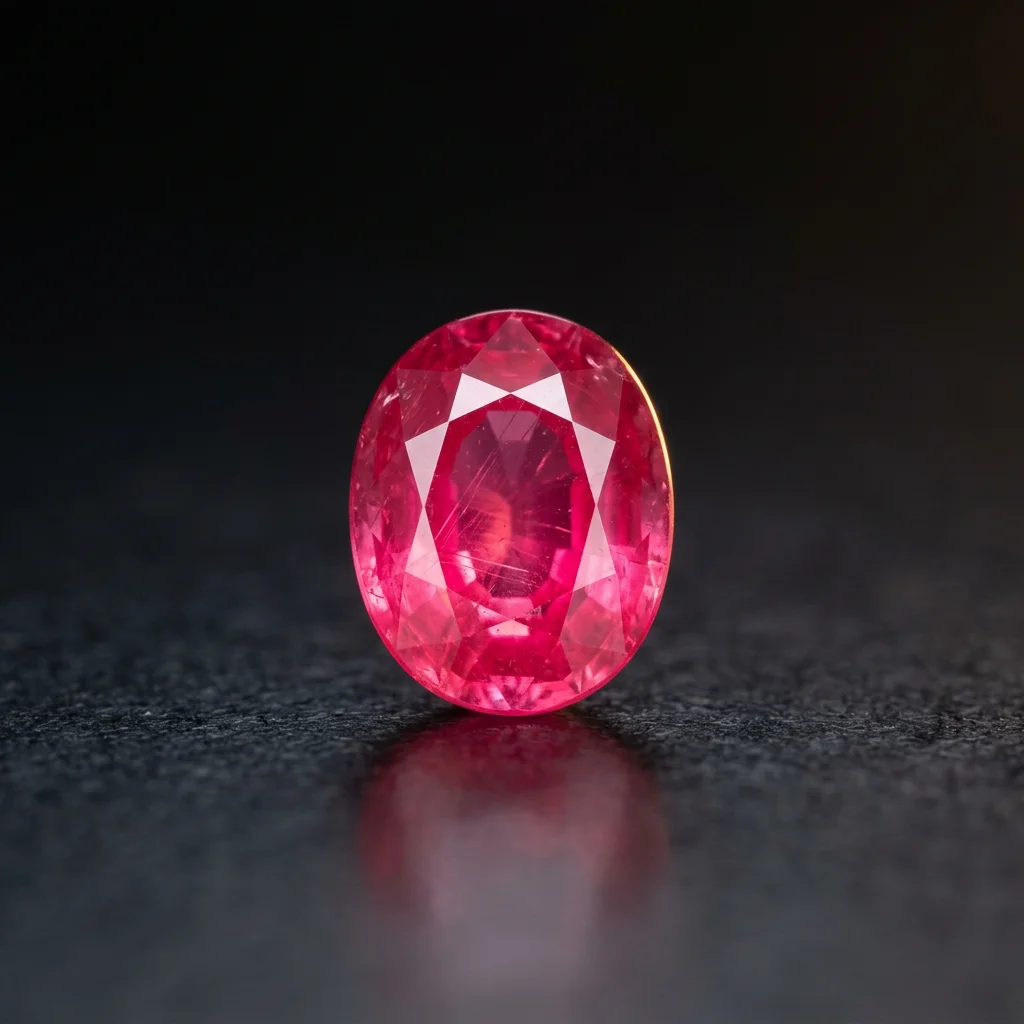
A Ceylon ruby is red corundum mined in Sri Lanka, coloured by chromium, and it tends to run lighter and brighter than ruby from Burma or Thailand. Much Sri Lankan ruby sits at the pinkish red end of the species, close to the line where the trade stops saying ruby and starts saying pink sapphire.
Where a stone falls against that line is a colour judgement the laboratory makes, which is why the report matters more here than in almost any other family: the same stone priced as ruby or as pink sapphire sits on two different scales.
The families
Why are they grouped this way?
They are grouped by family rather than by species, because that is how the trade asks for them. Garnet is a group of related minerals rather than one mineral, and alexandrite is the colour change variety of chrysoberyl, so a family row describes what a buyer would name at the counter.
Reading across families is fair as a description of the market, not as a ranking of the stones: scarcity and demand differ family by family, and a price per carat carries none of that with it.
The wear
Which of them suit daily wear?
Hardness differs family by family. Ruby is corundum and wears as a sapphire does, while moonstone is soft enough to want a protective setting, and the price says nothing about either.
If a stone is meant for a ring worn every day, say so when you ask about it: the setting and the family together decide whether it will live happily there, and a gemmologist will tell you plainly.
Keep reading
Looking for the sapphire prices?
The sapphire types have their own pages: general ranges by type on the index, the full matrix by weight, and the unheated premium taken apart. Every figure follows the same rules, and every stone here is priced on its own listing.

Questions
Asked about the rare families
If a question about these families is not answered here, write to Colombo and a gemmologist replies, not a template.