Price data
How these gem prices are calculated
This guide carries two kinds of figure and never mixes them in one table. Live figures are computed from the stones currently listed on this site, with nothing typed in and nothing estimated. General figures are drawn from published trade and gemmological guides, labelled as such and dated. This page sets out how each is made.

The rules for a live figure
- Every published figure is a median price per carat, in US dollars.
- Only published stones carrying a price, a carat weight and an issued report count.
- A group publishes at three observations or more; thin groups are withheld.
- The basis line under each table names the stones it drew on.
- Saving a stone clears the cache, so the figures recompute themselves.
- A general market table follows none of these rules: it is typed in, sourced from published guides and dated, and it says so beneath itself.
The population is public: every observation is a stone you can open, with its price, its carat weight and its laboratory report on the listing.
View the stonesThe population
What counts as an observation?
An observation is one stone listed on this site: published rather than pending, with both a price and a carat weight recorded. Observations feed the live figures only; the general market tables draw on nothing from this site. A stone whose report number is not yet on file counts as pending, carries no price and never reaches the calculation.
Nothing from outside the listings is admitted. No auction results, no dealer quotes and no figures borrowed from elsewhere in the trade enter these tables, because the pages describe what is listed here rather than what the wider market has done.

The computation
How are the figures computed?
Rule 01
One price per carat, per stone
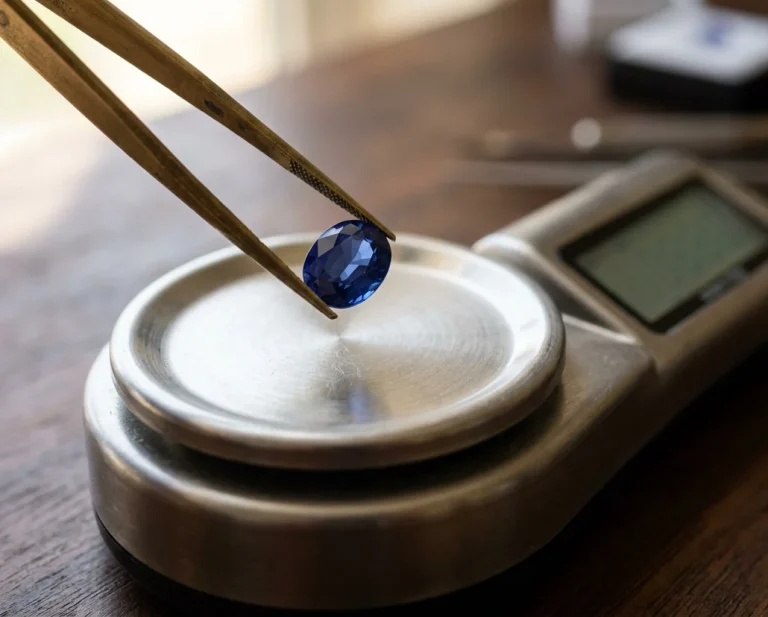
Each qualifying stone contributes its listed price divided by its carat weight, in US dollars, the currency used everywhere on this site. Price per carat puts stones of different sizes on a single scale.
Rule 02
Ordered, and the middle taken
Every published figure is a median: the price per carat of each stone in a group is put in order and the middle value taken; where a group holds an even count, the two middle values are averaged. A median resists a single unusual stone.

Rule 03
Whole dollars, stated basis
Figures are shown in whole US dollars, and each table states its own basis beneath it, naming the listed stones that table drew on. Read that line before the figure.

Rule 04
Thin groups stay unpublished
A group publishes only once it rests on three or more observations. Below that the row is left out entirely rather than shown thin, and a table with no qualifying group publishes no table at all.

The limits
What can these figures not tell you?
They are not an appraisal. A median describes a group of listings, so it says nothing about the stone in your hand, and no figure here is an offer, a valuation or a guide to what a particular stone should fetch.
Nor are they an index of the whole trade. They describe the stones listed on this site and nothing beyond it, which is why every table carries a basis line naming the population it rests on. Read that line before the figure: a table drawing on few listings says less than one drawing on many.
Questions
Asked about the method
If a question about the method is not answered here, write to Colombo and a gemmologist replies, not a template.