Ceylon Moonstone
Blue sheen from the Meetiyagoda shafts, worked by hand since 1906 and found properly nowhere else. Softer than everything else we sell, so we tell you how to wear it.

Other Ceylon Gemstones

Natural
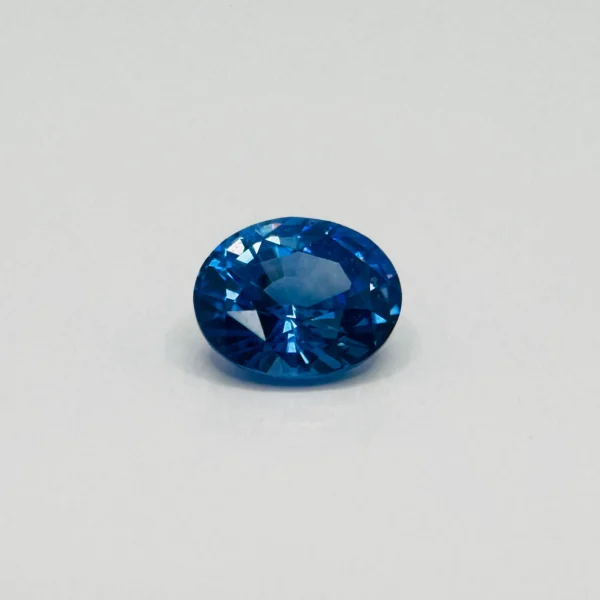
Natural Ceylon Blue Sapphire Oval Mixed Cut
Enquire
Natural
Natural Ceylon Vivid Blue Sapphire Round
Enquire
Natural
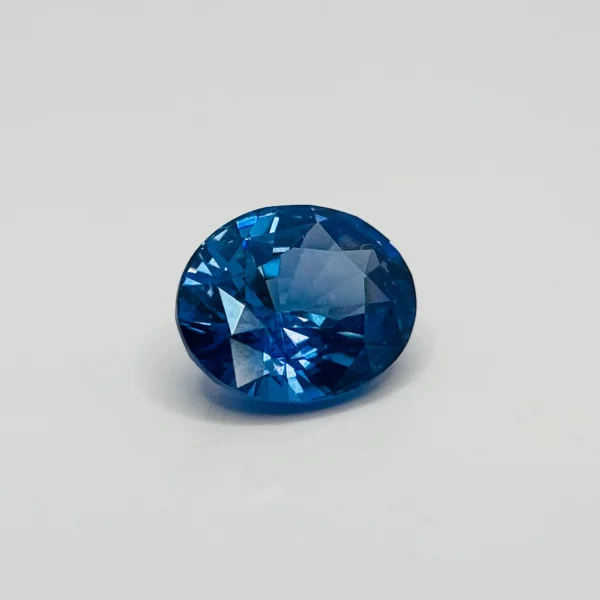
Natural Ceylon Blue Sapphire Mixed Oval
Enquire
Natural
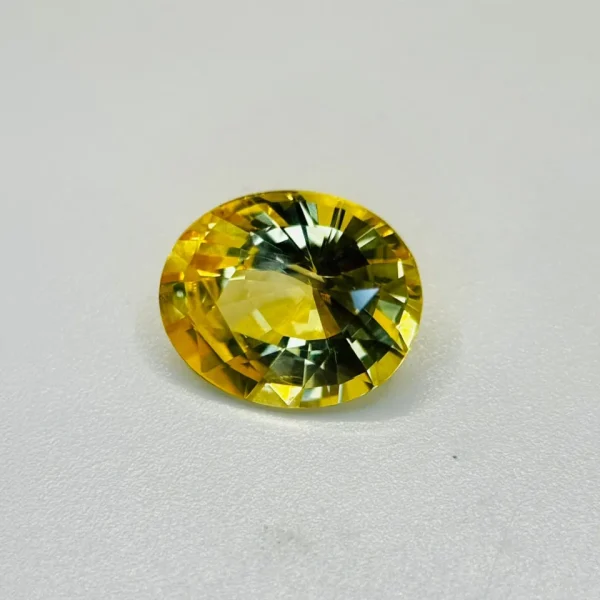
Natural Ceylon Vivid Yellow Sapphire
Enquire

Natural
Natural Ceylon Vivid Blue Sapphire Mixed Cut
Enquire

Certified
Parti sapphire, elongated octagon
US$ 3,150

Certified
Ceylon royal blue sapphire, cushion
US$ 8,900

Certified
Vivid blue sapphire, cushion
US$ 6,400
One village, since 1906
A Ceylon moonstone with real blue sheen almost certainly came out of Meetiyagoda, a village near Ambalangoda on the south coast, roughly six hectares of ground sitting over a rotted feldspar pegmatite. It was found during agricultural work in 1906. Ten small mines have supplied the world's fine blue material ever since. We buy out of them.
The mining is hand work. Narrow rectangular shafts called yati illama, framed with coconut wood beams, a man lowered down on a rope filling wicker baskets that get hauled up and washed by hand. No machinery of consequence. It is worth knowing because it explains the supply: a good year is a matter of a few dozen fine stones, not a parcel.
India, Madagascar, Myanmar and Tanzania all produce moonstone. None of them produce a Ceylon moonstone. The association was strong enough that the stone was once traded simply as Ceylon opal.
Why a Ceylon moonstone is blue and most are not
The glow has a mechanism worth understanding, because it tells you what you are paying for. Two feldspars, orthoclase and albite, start out mixed. They separate as the crystal cools into microscopically thin alternating layers. Light entering the stone scatters between them and returns as the billowing sheen the trade calls adularescence.
Layer thickness decides the colour. Thinner layers scatter short wavelengths and give blue. Thicker ones give white or silver. Blue is therefore not a variety or a grade, it is a narrow accident of how one crystal cooled, which is exactly why fine blue is rare while white is everywhere.
Judge three things. Is the body transparent rather than milky. Does the sheen float across the whole dome rather than sitting off to one edge. Does it hold as you tilt the stone. A Ceylon moonstone that only flashes at one angle has been cut to save weight rather than to show the sheen.
This is the softest thing we sell
We have spent every other page on this site telling you sapphire is nine on the Mohs scale with no cleavage plane. A Ceylon moonstone is six to six and a half with cleavage in two directions, which makes it the one stone we sell that genuinely needs looking after.
Ordinary household dust contains quartz, which is harder than moonstone, so a ring worn daily will lose its polish over years. A knock at the wrong angle can cleave it. None of that makes it unwearable. It does mean a bezel rather than claws for a ring, earrings and pendants over knuckle duty, no ultrasonic cleaner. Warm soapy water and a soft brush, then keep it away from your sapphires in the box.
Anyone who tells you a moonstone engagement ring needs no thought is selling rather than advising.
Rainbow moonstone is a different mineral
The name is everywhere and the trade has broadly accepted it, so this is a grey area rather than a fraud. Still worth knowing what you are buying. Rainbow moonstone is transparent labradorite, a different feldspar. Its multicoloured flash is labradorescence rather than the single floating blue glow of true adularescence.
A laboratory separates them in seconds by refractive index. Orthoclase moonstone reads around 1.52, labradorite closer to 1.56. Most rainbow material comes from India and Madagascar. It is a lovely stone. It is not what Meetiyagoda produces, so we do not sell it under that name.
What it costs
Fine blue material runs somewhere between fifty and five hundred dollars per carat, with strong stones above five carats regularly sitting at the upper end of that. Commercial white material costs a small fraction of it. Size cuts both ways here. White and silver stones reach hundreds of carats, while a blue sheen Ceylon moonstone rarely passes fifteen or twenty.
Questions
Asked before you buy
If a question about Ceylon moonstone is not answered here, write to Colombo and a gemmologist replies, not a template.