Ceylon Parti Sapphire
Two or more colours in a single crystal, with the zone boundaries left intact. Cut in Ratnapura, unheated, and sold with a report number you can check yourself.
Available Ceylon Parti Sapphire Gemstones
2 stones


Other Ceylon Gemstones
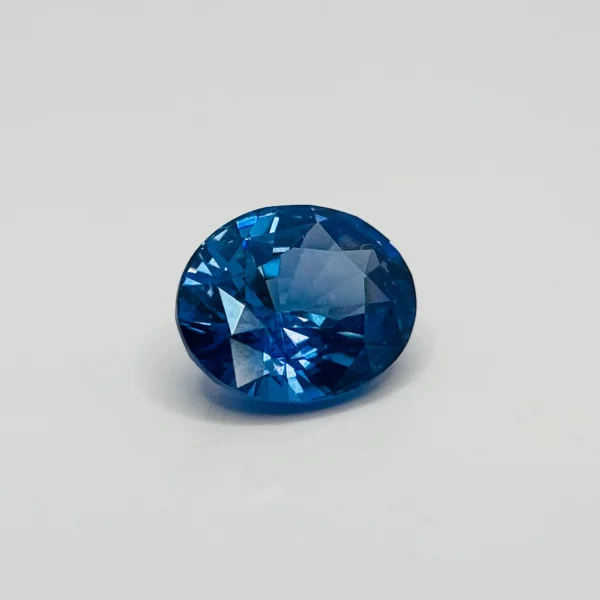
Natural
Natural Ceylon Blue Sapphire Mixed Oval
Enquire
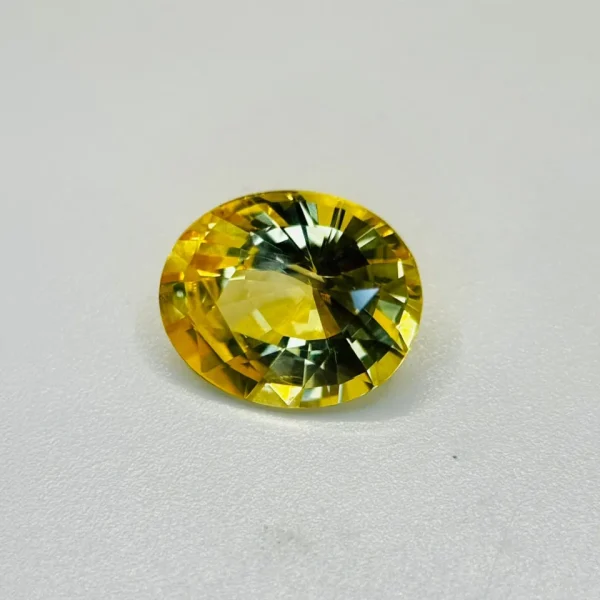
Natural
Natural Ceylon Vivid Yellow Sapphire
Enquire

Natural
Natural Ceylon Blue Sapphire Oval Mixed Cut
Enquire

Natural
Natural Ceylon Vivid Blue Sapphire Mixed Cut
Enquire
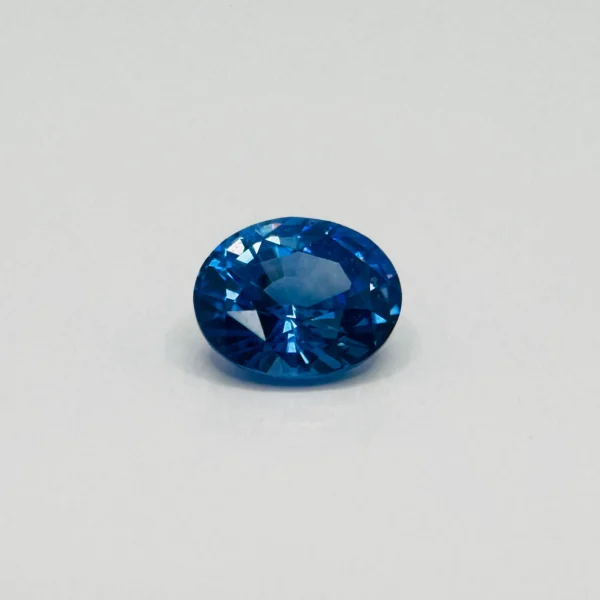
Natural
Natural Ceylon Vivid Blue Sapphire Round
Enquire

Certified
Ceylon royal blue sapphire, cushion
US$ 8,900

Certified
Vivid blue sapphire, cushion
US$ 6,400

Certified
Hot pink sapphire, oval
US$ 3,650
How to choose a parti sapphire
A parti sapphire shows two or more distinct colours in one crystal, with visible boundaries between them. Judge how the zones are arranged and how they read face up, because that arrangement is the stone, not a flaw in it.
Everything else follows from that. Treatment matters less here than on any other sapphire, for reasons set out below, and clarity matters less than where the colours sit.
Parti or teal: not the same stone
A teal sapphire is one blended colour. Blue and green mix and your eye reads a single peacock hue. A parti sapphire keeps its colours apart, so you see two or three separate zones with a line between them. Both usually come from iron, and both are usually unheated, but they do not look alike in the hand.
| Teal sapphire | Parti sapphire | |
|---|---|---|
| What you see | One colour, blue and green blended | Two or more colours, kept separate |
| Boundaries | None, the colours merge | Visible, and the point of the stone |
| Two stones alike? | Possible, pairs can be matched | Effectively never |
| Usual treatment | Unheated | Unheated |
The line between them is a judgement, not a rule, and some stones sit on it. If you want the blended version, look at teal sapphires instead. If you want the zones visible, you want this page.
Why the zoning is the point
In an ordinary sapphire, colour zoning is a fault. A blue stone that runs pale on one side is worth less than one that reads evenly, and a cutter will orient the rough to hide the zone under the culet so the face-up colour floods the whole stone.
A parti sapphire inverts that. The zoning is even, deliberate and attractive, so the cutter's job reverses: place the colours where you can see them, and balance them across the table. That is why two parti stones of the same weight and origin can be priced very differently. You are paying for the arrangement.
Judge it the way you would judge a composition. Do the colours divide cleanly or muddle into brown at the join? Does the stone still read well when you tilt it? Is one zone so dominant that the second reads as a stain rather than a partner?
Why parti sapphires are almost never heated
Heat blurs zone boundaries. At the temperatures used to treat corundum, the trace elements that carry the colour diffuse a short distance, and sharp divisions between zones go soft and foggy. Heating a parti sapphire destroys the thing that makes it a parti sapphire.
So the usual sapphire logic runs backwards here. Elsewhere unheated is the rare premium; with parti material, unheated is simply the norm, because nobody has a reason to heat it. That makes it one of the few sapphires you can buy in its natural state without paying a rarity premium for the privilege.
It does not make the report optional. Unheated being normal is not the same as unheated being guaranteed, and origin still needs proving. Ask which laboratory issued the report and check the number yourself.
Where parti sapphires come from
Most parti sapphire on the market is Australian. The Queensland and New South Wales fields produce blue, green and yellow zoned material in quantity, and it dominates the listings you will find elsewhere. Madagascar and Thailand supply much of the rest.
Ceylon parti is less common, which is the whole reason this page exists. Sri Lankan stones tend to run brighter and more transparent than Australian material, which is often darker and more strongly green. Neither is better. They are different looks, and the choice is yours to make rather than ours to make for you.
Origin is a value claim, so it needs evidence. Our stones come out of the Ratnapura and Elahera gravels, are cut in Sri Lanka, and carry a report number you can check against the issuing laboratory's own records.
What a parti sapphire costs
Less than an evenly saturated stone of the same weight, as a rule. Parti material has historically been priced below single-colour sapphire of comparable size, which is good news if you want an unusual stone and are not chasing a benchmark colour.
The 2.31 carat octagon listed here works out at about US$1,360 per carat, unheated and certified. Treat that as a reference point rather than a market rate, because parti pricing turns on the colour arrangement more than on any measurable grade.
One warning. Search this term and you will find parti sapphires at thirty or fifty dollars. At that price the stone is not what the listing says, or there is no report behind it, or both. Ask which laboratory, ask for the number, and check it.
Hard enough to wear every day
Sapphire is 9 on the Mohs scale, harder than any natural gem except diamond, with no cleavage plane to split along. Parti stones are no different: the zoning is a colour feature, not a structural weakness, and it will not make the stone more fragile.
Warm soapy water and a soft brush. Bezel settings suit parti stones well because they frame the composition, though any setting works. If blue is what you were really after, the same terms cover our blue sapphires and every other Ceylon stone we list.
Questions
Asked before you buy
If a question about parti sapphire is not answered here, write to Colombo and a gemmologist replies, not a template.