Price data
Ceylon sapphire prices by type
What each sapphire type generally lists for per carat, drawn from published trade and gemmological guides and reconciled into round, honest ranges: a starting point for judging any quote, including ours.

The guide
What does each sapphire type cost?
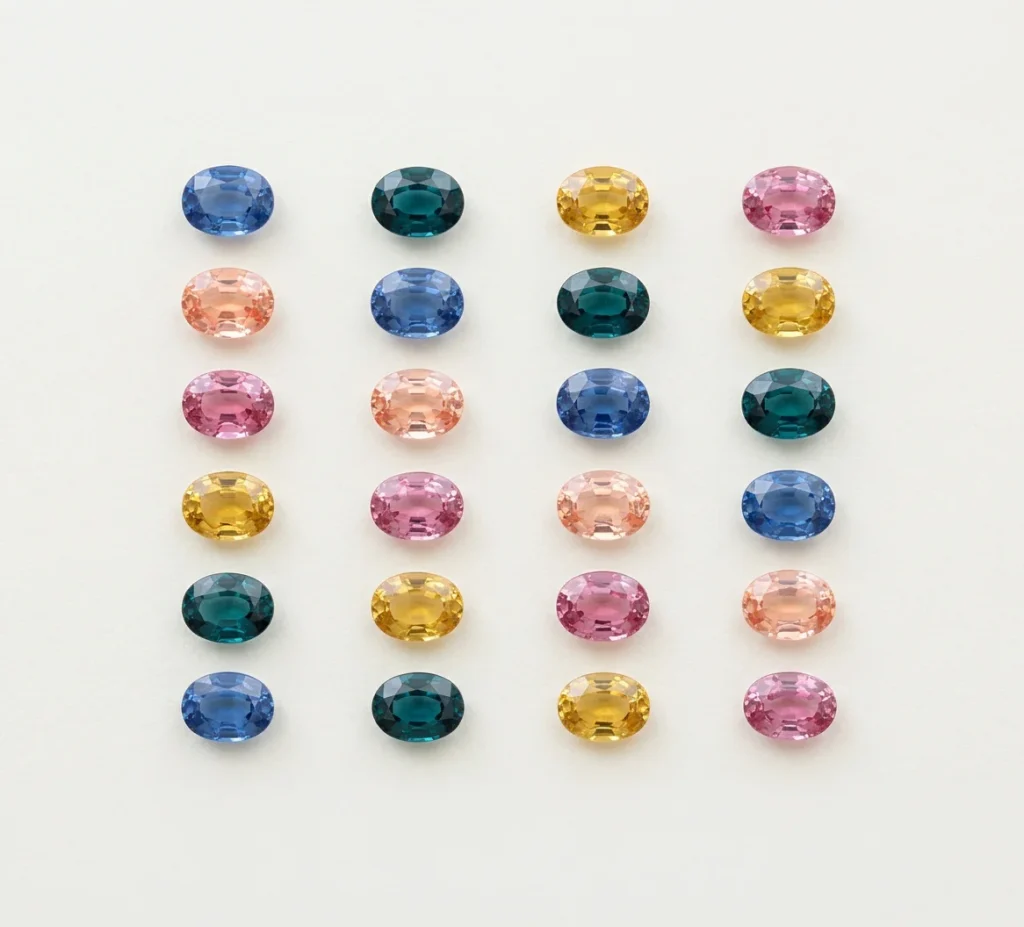
| Type | General range, US$ per carat | What moves a stone within it |
|---|---|---|
| Blue, heated | about US$ 200 to US$ 4,000 | Pale commercial stones at the bottom, fine royal blue at the top. |
| Blue, unheated | about US$ 500 to US$ 12,000 | Typically two to five times the equivalent heated stone; fine cornflower and royal blue sit at or above the top. |
| Padparadscha | about US$ 2,000 to US$ 20,000 | Heated stones at the bottom, fine certified unheated stones at the top; exceptional stones exceed this by multiples. |
| Pink | about US$ 150 to US$ 4,000 | Pastels at the bottom; vivid unheated hot pink sits above the range. |
| Yellow | about US$ 100 to US$ 2,000 | Pale lemon at the bottom, vivid golden unheated stones at the top. |
| Teal | about US$ 500 to US$ 3,000 | Most true teal is unheated; an even balance of blue and green carries the top. |
| Parti | about US$ 150 to US$ 2,000 | Varies widely with the pattern; published figures for parti are thinner than for any other type. |
| Green | about US$ 100 to US$ 2,000 | Green scatters more than any other colour; clean pure greens sit well above dark or olive stones. |
| White | about US$ 50 to US$ 800 | The least expensive faceted type; large clean well cut stones carry the top. |
| Star | about US$ 100 to US$ 3,000 | The sharpness and centring of the star dominate the price more than the body colour. |
General market figures drawn from published trade and gemmological guides, last reviewed August 2026. They describe the wider retail market in round terms, not our listings; every stone on this site is priced on its own listing.
Reading the ranges
- Every range assumes an eye clean, well cut stone of roughly one to three carats at retail.
- The price per carat climbs steeply past two to three carats.
- An unheated stone typically asks two to five times the equivalent heated one.
- Fine certified stones at Western retail sit at the top of each range, or above it.
A range is a starting point, not a verdict. Set any stone you are considering beside its own laboratory report, then judge its price against what the report confirms.
View the stonesThe spread
Why are sapphire prices so wide apart?
Colour moves price most because it is what the eye reads first and what the ground supplies least evenly. Two sapphires of the same weight and clarity can sit far apart on price when one holds a strong even hue and the other reads pale or grey.
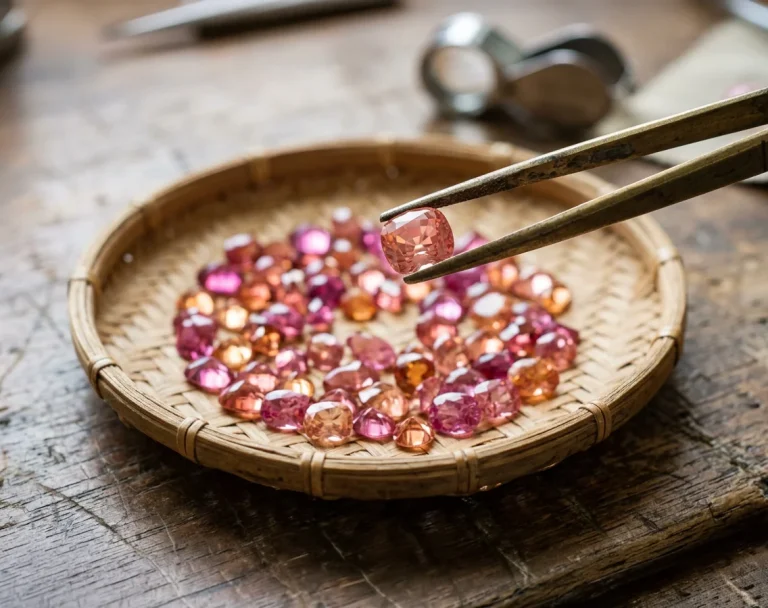
Scarcity pushes the same way. Some colours surface far more often than others in the island gravels, and padparadscha, which has to hold pink and orange together, is the scarcest of them. Cut then decides how much of the colour the stone shows face up, so a well oriented stone asks more than a poorly oriented one of the same hue.
From our own listings
Want figures computed from real stones?
The rest of this guide computes its figures live from the stones listed on this site: medians of price per carat by colour, by carat bracket and by treatment, each with the number of stones behind it printed beside it, and the method published in full.
Questions
Asked about the figures
If a question about the figures is not answered here, write to Colombo and a gemmologist replies, not a template.