Ceylon Alexandrite
Green in daylight, red under a bulb, with a percentage on the report saying how completely it makes the journey. Certified, natural, from the Ratnapura gravels.

Other Ceylon Gemstones

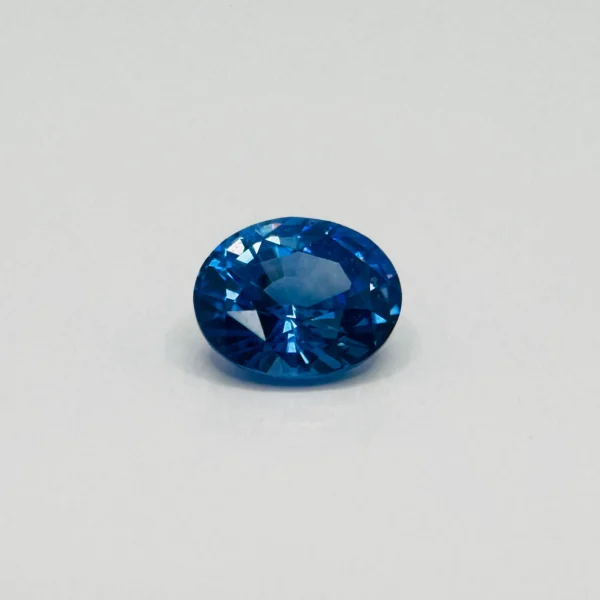
Natural
Natural Ceylon Blue Sapphire Oval Mixed Cut
Enquire
Natural
Natural Ceylon Vivid Blue Sapphire Round
Enquire
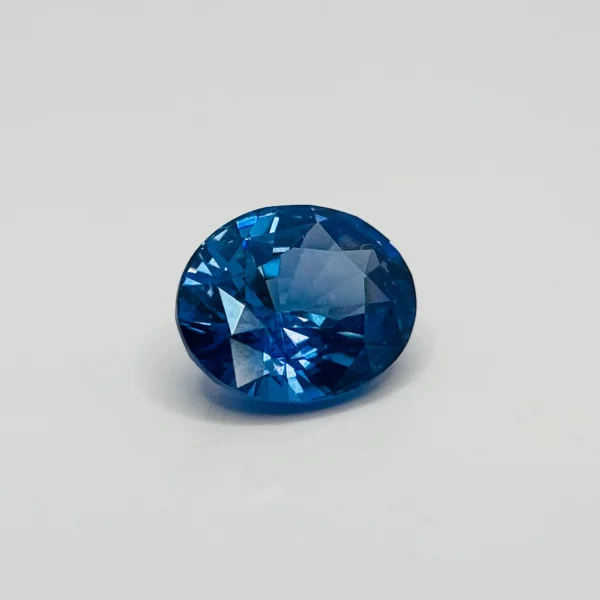
Natural
Natural Ceylon Blue Sapphire Mixed Oval
Enquire
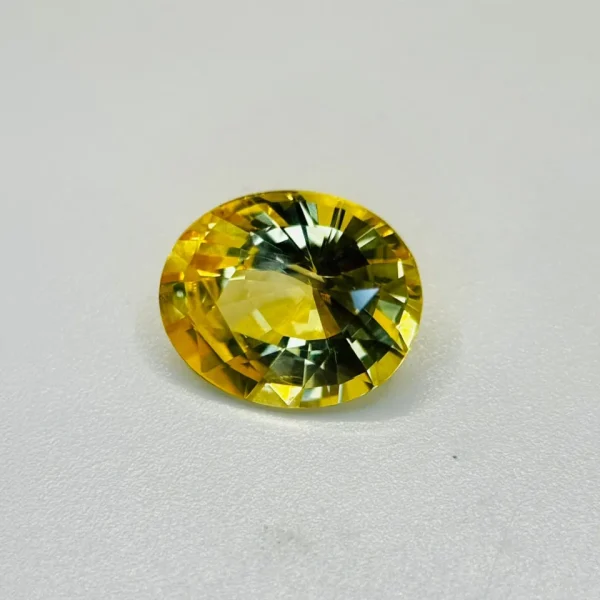
Natural
Natural Ceylon Vivid Yellow Sapphire
Enquire

Natural
Natural Ceylon Vivid Blue Sapphire Mixed Cut
Enquire

Certified
Parti sapphire, elongated octagon
US$ 3,150

Certified
Ceylon royal blue sapphire, cushion
US$ 8,900

Certified
Vivid blue sapphire, cushion
US$ 6,400
No green in daylight, no alexandrite
Carry that one rule when you shop for a Ceylon alexandrite and you will avoid most of what is sold under the name. The commonest fake is not new or clever: it is synthetic corundum doped with vanadium, sold as alexandrite since before the First World War. It shifts from grey blue to purple mauve. Attractive enough. Never green.
Real alexandrite is chrysoberyl rather than corundum. Its chromium sits in the crystal so the stone transmits green and red almost equally. Daylight favours the green. A tungsten bulb or a candle favours the red. That is the whole phenomenon. Green in daylight is not optional.
Two other things get sold as alexandrite. Colour change garnet and spinel, which shift but never green to red. Then colour change chrysoberyl outside the classic range, green to yellow or yellow green to blue green. That is a real and valuable stone which will not come back from a laboratory called alexandrite.
The change is graded as a percentage and that percentage is the price
Nothing else we sell is graded this way. Gemmologists put a number on how completely the stone transforms, from about five percent to a hundred. Everything else about the stone is secondary to it.
| Change | What you see | Where it sits |
|---|---|---|
| 80 to 100 percent | Clean green to clean red with no bleed between them | Top of the market and genuinely rare |
| 50 to 60 percent | Both colours present, some muddying where they meet | Mid grade, most of what sells well |
| Under 50 percent | A shift you have to look for | Commercial, the bulk of production |
Ask for the percentage before you ask anything else. A one carat stone at ninety percent change is a different object from a one carat stone at forty. That gap is larger than any clarity or cut difference will ever be.
A Ceylon alexandrite gives you size rather than the Russian blue green
We would rather tell you this than have you discover it. GIA puts it plainly: Sri Lankan alexandrites are generally larger than Russian ones, but their colours tend to be less desirable, with greens leaning yellowish rather than blue green and reds coming out brownish rather than purplish red.
That is our material and we are not going to dress it up. What a Ceylon alexandrite offers instead is size and availability. The Russian Urals are effectively finished. Brazil's Hematita material is the modern benchmark and it is thinning. Sri Lanka still produces at size, including cat's eye chrysoberyl that shows chatoyancy and colour change at once. That is about as rare as gemstones get.
A 26 carat Ceylon alexandrite sold at Sotheby's in 2015 for around twenty nine thousand dollars a carat, so nobody should mistake honest description for a low opinion of the material.
One photograph cannot show you this stone
Every other gem can be judged reasonably from a good image. This one cannot, because you need two, with the light source in each being the easiest thing in the trade to cheat. An unusually warm bulb will pull red out of a stone that barely changes.
So we do it live. On a video viewing we take the stone to a window, then under a household bulb, so you watch the shift happen rather than compare two photographs somebody else chose. If a seller will only show you two stills, ask why.
What it costs and why cheap means fake
Fine natural alexandrite above a carat runs from roughly ten thousand dollars per carat into the tens of thousands, with stones showing fifty to sixty percent change sitting near the lower end of that. A Ceylon alexandrite generally prices below Brazilian material of equivalent size.
The corollary matters more than the number. Natural alexandrite cannot be cheap, because the geology that makes it is vanishingly rare. Synthetic chrysoberyl grown by the Czochralski method is real alexandrite and perfectly honest when labelled as such, at a small fraction of the price. Lab grown stones are turning up in Colombo parcels described as natural, so this is not a distant problem. We will not list a Ceylon alexandrite without a report from a laboratory that separates the two.
Eight and a half on the Mohs scale, hard enough for daily wear, cleaned with warm soapy water and a soft brush rather than an ultrasonic. If phenomenal stones interest you, the star sapphires come out of the same gravels. Our spinels, blue sapphires and everything else we list carry the same reports.
Questions
Asked before you buy
If a question about Ceylon alexandrite is not answered here, write to Colombo and a gemmologist replies, not a template.