Ceylon Spinel
The stone the Crown Jewels mistook for ruby for six hundred years. Almost never treated, eight on the Mohs scale, priced at a fraction of the corundum it resembles.

Other Ceylon Gemstones

Natural
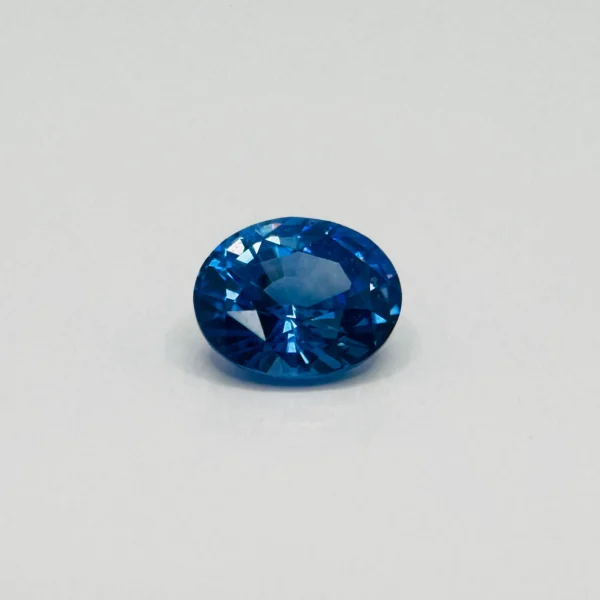
Natural Ceylon Blue Sapphire Oval Mixed Cut
Enquire
Natural
Natural Ceylon Vivid Blue Sapphire Round
Enquire
Natural
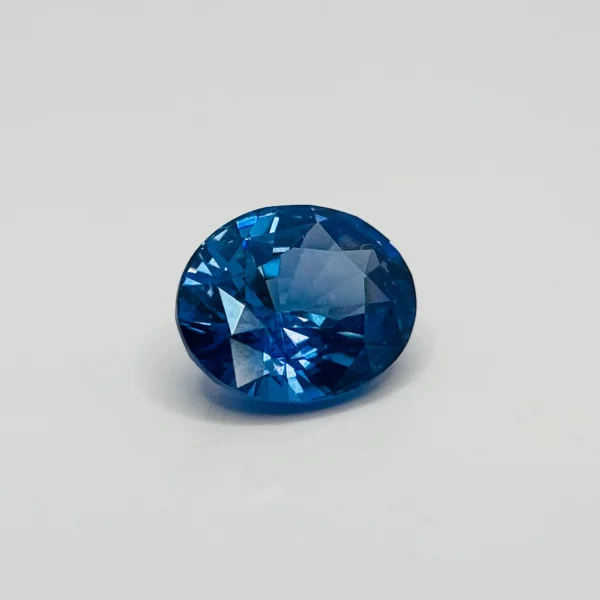
Natural Ceylon Blue Sapphire Mixed Oval
Enquire
Natural
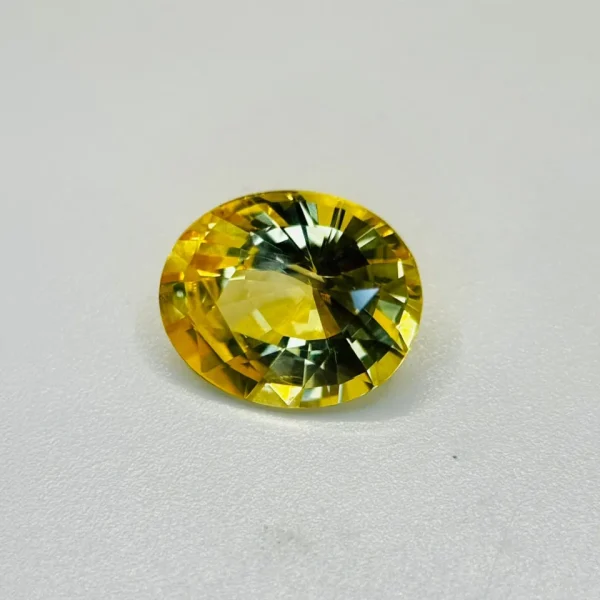
Natural Ceylon Vivid Yellow Sapphire
Enquire

Natural
Natural Ceylon Vivid Blue Sapphire Mixed Cut
Enquire

Certified
Parti sapphire, elongated octagon
US$ 3,150

Certified
Ceylon royal blue sapphire, cushion
US$ 8,900

Certified
Vivid blue sapphire, cushion
US$ 6,400
The Black Prince's Ruby is not a ruby
It sits at the front of the Imperial State Crown, roughly a hundred and seventy carats of red stone. It is spinel. So is the Timur Ruby at three hundred and fifty two carats. So is the great red in the Russian Imperial Crown. For six centuries the finest red gems in Europe were misfiled, because spinel and ruby come out of the same gravels looking much alike, so nobody could yet tell them apart.
That history is why a Ceylon spinel still costs a fraction of the corundum it was confused with. The mistake was corrected around two hundred years ago. The pricing has never fully caught up, which is the opportunity and the reason we hold the stone at all.
Cobalt is a chemical claim, not a colour word
Here is the trap in this category and it costs buyers real money. Two entirely different blues get sold under one word. Most blue spinel takes its colour from iron and reads as a handsome denim or steel blue. True cobalt spinel takes it from traces of cobalt. The result is electric, saturated and faintly violet, holding its blue in dim light where iron blues go grey.
The price gap between them is enormous. So when a listing says cobalt, that is not a description of a shade. It is a statement about what is in the stone, testable by a laboratory with spectroscopy.
We will say the honest thing about our own material. A Ceylon spinel in blue is frequently cobalt bearing, but it often carries more iron than Vietnamese or Tanzanian stones, which pushes it towards a deeper denim blue or adds a purple modifier rather than that neon glow. Some of our stones are true cobalt. Some are cobalt bearing without cobalt driving the colour. Ask which. Ask the laboratory rather than us.
Nobody bothers heating it
Spinel is one of the very few gems in this trade that arrives essentially as it left the ground. Not because heating would ruin it, as with a star stone, but because heating does almost nothing worth the fuel. There is no commercial reason to treat a Ceylon spinel, so overwhelmingly nobody does.
That makes it a straightforward stone to buy honestly. The report should still name the laboratory and still be checkable, because synthetic spinel grown by flame fusion has been produced for a century. It turns up in old jewellery constantly. But the treatment line on a spinel report is usually the shortest line on it.
Ceylon spinel produced the big ones
This is one colour where we are not going to talk down our own gravels. The British Museum holds a red spinel crystal from Sri Lanka of five hundred and twenty carats. The American Museum of Natural History has a seventy one carat red from here. The Smithsonian holds a forty five carat pale purple and a pink violet approaching thirty, both Sri Lankan.
Burma's Mogok remains the home of fine red. Mahenge in Tanzania rewrote the ceiling in 2007 with neon pink material that now outprices most red. What a Ceylon spinel offers is breadth: reds, pinks, purples, lavenders, greys and blues, recovered from the same river gravel as the sapphire, often by the same miners on the same day.
Three to five times cheaper than the stone it was mistaken for
Good quality spinel around a carat generally runs from a few hundred dollars per carat to somewhere near fifteen hundred. Fine Mahenge pinks reach several thousand. Burmese neon reds go further still. True cobalt blue is the rarest and dearest of the lot. At matched quality a Ceylon spinel typically costs three to five times less than the ruby it resembles.
Buy on colour saturation before size. A vivid two carat stone beats a washed out four carat one on every measure that matters, including what somebody will pay you for it later. Grey and brown modifiers are what to avoid.
Questions
Asked before you buy
If a question about Ceylon spinel is not answered here, write to Colombo and a gemmologist replies, not a template.